Construction Services in Blanchard, LA
Jackson Construction serves homeowners and businesses in Blanchard with custom home building, remodeling, additions, exterior improvements, and commercial construction shaped by thoughtful planning and refined craftsmanship.
A More Refined Construction Experience in Blanchard
Blanchard offers something increasingly rare in the Shreveport area: room to build, mature tree cover, and a genuinely rural setting within a short drive of the city. Families continue to move northwest out of Shreveport for exactly that combination.
Building here tends to look different than building in town. Lots are larger, tree cover is heavier, utilities are not always at the road, and drainage across a property matters as much as the floor plan drawn on it.
Whether you are building a custom home, renovating an established house, or planning a commercial project, we bring a more refined construction experience to every project.
Our Blanchard Service Area
Our work extends throughout Blanchard and the surrounding northwestern Caddo Parish communities, from the Highway 173 corridor to the properties north of Cross Lake and the rural areas beyond town.
Our Construction Services in Blanchard
Custom Home Building
Home Remodeling
Home Additions
Exterior Improvements
Commercial Construction
Custom Home Building
We manage the custom home process from site evaluation and preliminary plans through final walkthrough, with design and construction under one roof so the budget, schedule, and design intent stay aligned.
On a wooded Blanchard lot, the earliest decisions carry the most weight: where the house sits, which trees stay, how the drive approaches, how water moves across the site, and how utilities reach the building envelope. Those choices are difficult to revisit once site work is underway.
Home Remodeling
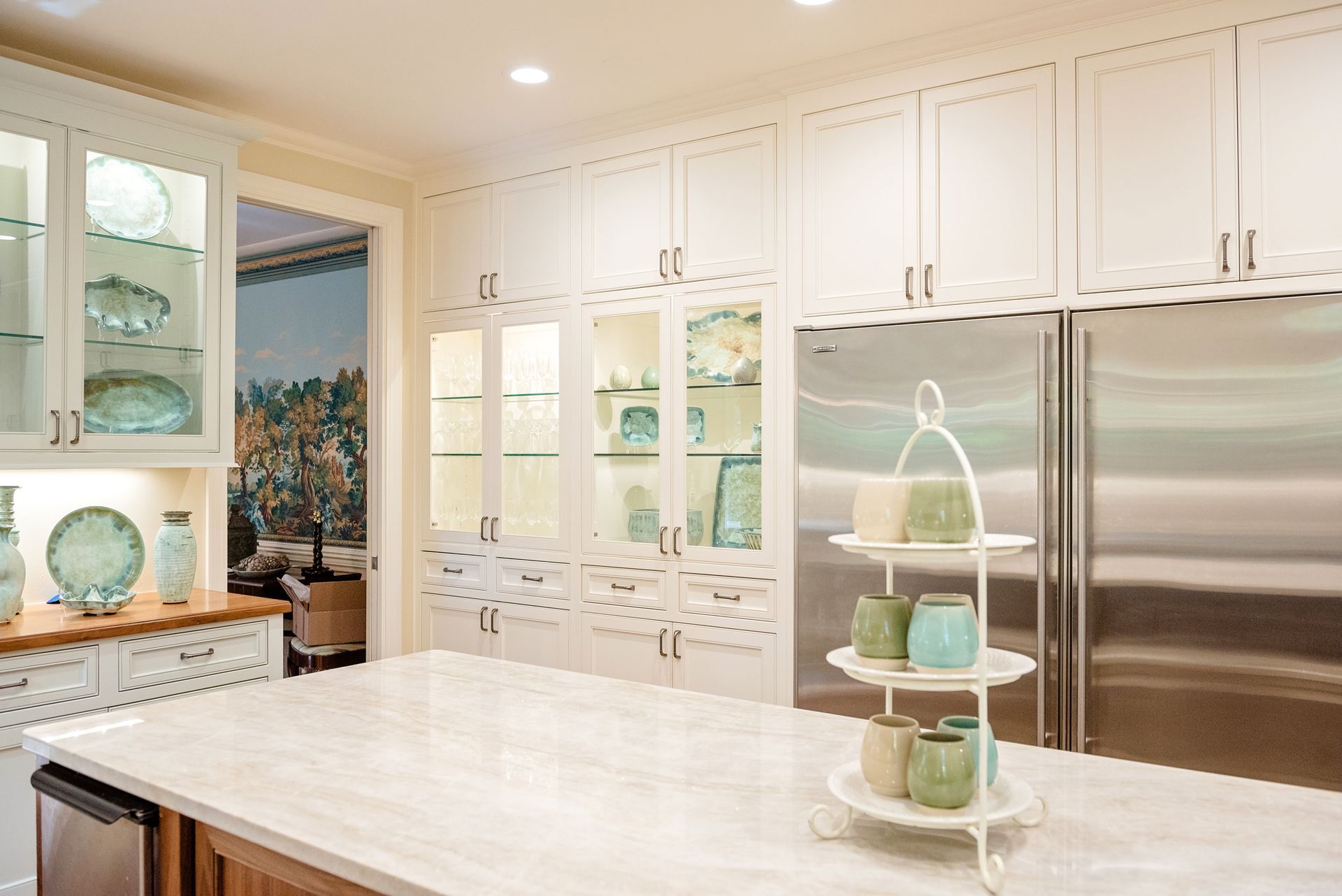
For homeowners already settled in Blanchard, remodeling is frequently the better path than moving, particularly when the land and location are exactly what you want. We handle kitchens, primary suites, and whole-home renovations, including work on older Caddo Parish homes that need updating behind the walls as well as in front of them.
Home Additions
Larger lots make additions more workable here than in tighter neighborhoods, with fewer setback constraints and more room to build. We handle room additions, primary suite expansions, second-story additions, and covered outdoor living space designed to read as original to the house.
Exterior Improvements
Homes on open or heavily wooded land take more weather than homes in sheltered subdivisions. We handle siding, roofing coordination, windows and doors, outdoor living spaces, and exterior renovations built for Northwest Louisiana heat, humidity, storms, and heavy seasonal rainfall.
Commercial Construction
We work with Blanchard business owners on office and retail build-outs, professional spaces, and commercial renovations serving the area’s continued residential growth.
Communities and Areas We Serve Near Blanchard
Jackson Construction works throughout Blanchard and the surrounding northwestern Caddo Parish area, including:
- The Town of Blanchard
- The Highway 173 and Blanchard-Furrh Road corridor
- Properties north and west of Cross Lake
- Areas near Walter B. Jacobs Memorial Nature Park
- Mooringsport and Oil City
- Vivian and northern Caddo Parish
- Northwest Shreveport neighborhoods bordering the Blanchard area
If you are building or renovating just outside these areas, we are still glad to talk. Our work extends throughout Caddo Parish and the wider Northwest Louisiana region.

Built for the Way Blanchard Lives
Every project begins with understanding the property, the goals, and the people who will use the space every day. Our process is designed to bring clarity, care, and craftsmanship to residential and commercial construction throughout Blanchard.
From custom builds and additions to remodels, exterior projects, and commercial spaces, Jackson Construction helps clients move forward with confidence.
Frequently Asked Questions
Who issues permits for construction in Blanchard, LA?
It depends on whether the property sits inside the Town of Blanchard municipal limits or in unincorporated Caddo Parish. A number of properties with a Blanchard mailing address fall outside town limits, which places permitting and inspections under parish jurisdiction.
Confirming this before design work begins matters, because submittal requirements, review timelines, inspection scheduling, and applicable setback and zoning standards can differ between the two.
Beyond the primary building permit, a project may involve:
- Driveway or culvert permits where a new drive connects to a parish or state roadway
- Health department approval for an individual sewage treatment system where municipal sewer is unavailable
- Floodplain review for parcels in or near a designated flood hazard area
- Utility service agreements for extending power, water, or gas to the building site
We confirm jurisdiction and the full approval path during pre-construction, so the permitting sequence is understood before plans are finalized rather than discovered afterward.
Does building near Cross Lake involve additional requirements?
It can. Cross Lake serves as the primary drinking water supply for the City of Shreveport, and properties within the surrounding watershed can be subject to additional review, particularly regarding wastewater treatment and stormwater runoff.
The requirements that most often apply to properties near the lake or within its watershed involve:
- Individual sewage treatment systems — soil evaluation, system design, and approval standards intended to protect water quality
- Stormwater and erosion control — managing runoff during construction and after the project is complete
- Setbacks from the shoreline or drainage features — which affect where a structure can be placed on the lot
- Floodplain determination — for parcels in or adjacent to a designated flood hazard area
Because these requirements are tied to the specific parcel, they should be confirmed with Caddo Parish and the applicable agencies during pre-construction. Identifying them before design is finalized prevents a redesign after plans are already drawn.
What comes up most often when renovating an older Caddo Parish home?
The most common findings are outdated electrical service, pier-and-beam foundation settlement, and regulated materials in homes built before roughly 1980, including lead-based paint and asbestos-containing products.
What tends to surface once work begins:
- Lead-based paint — regulated in homes built before 1978, requiring lead-safe work practices when painted surfaces are disturbed
- Asbestos-containing materials — historically used in floor tile and mastic, some siding products, and textured ceilings, requiring proper assessment and handling
- Undersized electrical service — a panel adequate for a 1960s household is rarely adequate for a modern kitchen, HVAC system, and appliance load
- Knob-and-tube or early branch wiring — occasionally still in service in the oldest homes
- Pier-and-beam settlement — uneven floors traced to failed piers, sill damage, or moisture beneath the structure
- Galvanized supply piping — corroded internally, showing up as weak flow at fixtures
- Missing or minimal insulation — common in homes built before energy standards took hold
None of this is unusual, and none of it has to derail a renovation. It is far less expensive to address while the structure is open than to work around, which is why we budget assessment time into the schedule rather than treating it as a surprise.
Will I have municipal water, sewer, and natural gas, or will I need a well, septic, and propane?
It varies by parcel. Properties inside town limits and along established corridors are more likely to have municipal or rural water system service, while properties farther out frequently require an individual sewage treatment system, and natural gas is not available everywhere.
The four utility questions worth answering before you commit to a lot or a floor plan:
- Water — whether a rural water system serves the property, or a well is required
- Wastewater — whether municipal sewer is available, or an individual treatment system with soil evaluation and health department approval is needed
- Gas — whether natural gas service reaches the property, or appliances and heating will run on propane with a tank on site
- Electrical — the provider serving the area and the cost of extending service from the road to the building site
These answers affect more than convenience. They influence appliance and mechanical selections, the location of the building pad, and in some cases whether a particular house plan is practical on a particular lot. We evaluate them before design is finalized.
How do you build for Northwest Louisiana storms and power outages?
The regional risks are severe thunderstorms, high wind, hail, and periodic winter ice, and on rural properties those events frequently bring extended power outages. Building for them is a matter of specification and planning rather than a single product.
Measures worth discussing during design:
- Roofing specification — impact-rated products and proper fastening, which affect both durability and, in some cases, insurance premiums
- Window and door selection — glazing and installation details that hold up under wind-driven rain
- Structural connections — the framing and fastening details that tie the roof, walls, and foundation together as a continuous load path
- Standby generator provisions — a transfer switch and gas or propane supply, which are far easier and less expensive to rough in during construction than to retrofit
- Drainage and grading — the most cost-effective storm protection on a rural lot is water that moves away from the structure
- Tree management near the structure — evaluating limbs and trunks that could reach the house during a wind or ice event
For clients on wooded acreage, generator provisions and drainage are usually the two that deliver the most value for the money.
What is involved in adding a covered outdoor living space?
Outdoor living is one of the most requested additions we handle in this area, and it is more structural than most homeowners expect. A covered space is an addition to the house, not an accessory placed beside it.
A properly built outdoor living space involves:
- Foundation — a slab or pier system sized for the structure and sloped for drainage, tied appropriately to the existing foundation
- Structural tie-in — connecting the new roof to the existing framing and rooflines so the assembly sheds water correctly at every intersection
- Drainage — gutters, downspouts, and grading that carry roof runoff away from both the new slab and the existing foundation
- Outdoor kitchen utilities — gas, water, drain, and dedicated electrical circuits, all far easier to run before the slab is poured
- Ceiling, lighting, and fans — including fixtures rated for damp or wet locations
- Screening or enclosure — where insects or weather protection matter enough to justify it
- Material selection — finishes that hold up to direct sun, humidity, and temperature swings
The most common mistake we are asked to correct is a covered patio added without proper flashing at the roof tie-in or without drainage away from the house. Both cause damage to the existing structure, and both cost more to fix than to build correctly.
Begin With a Conversation
Tell us what you are hoping to build, improve, or expand in Blanchard, and we will help you understand what is possible, what to expect, and where to begin.